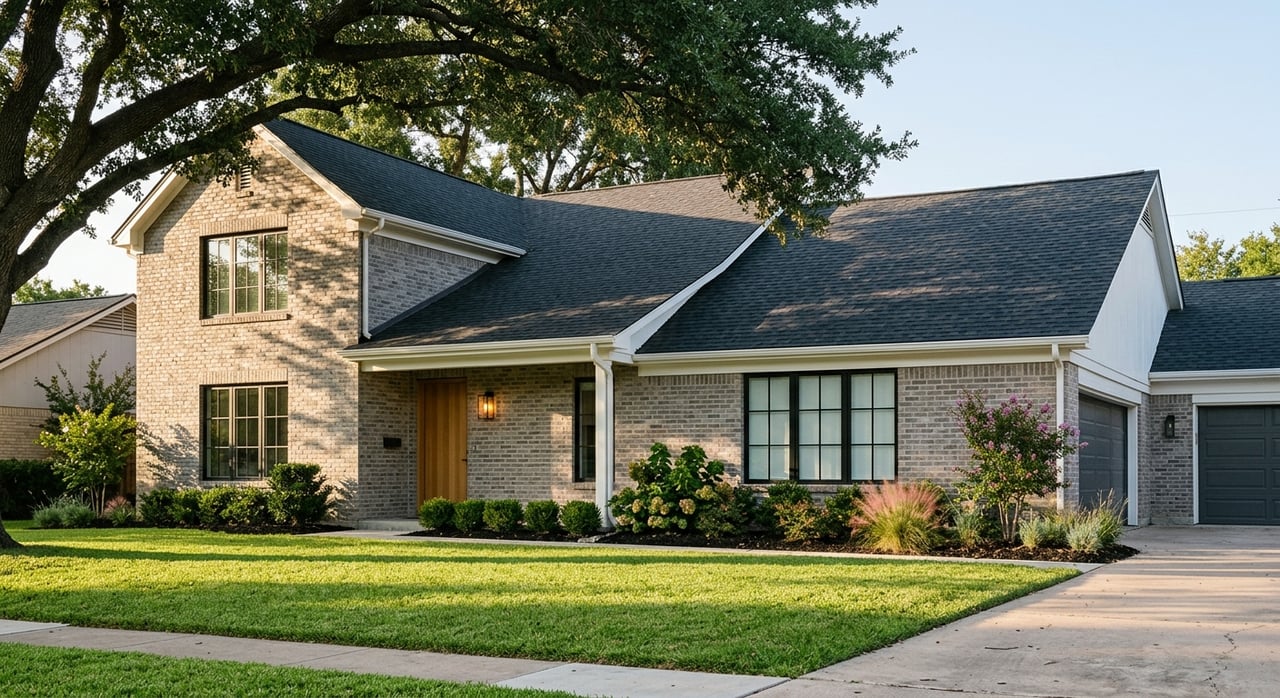
If you are house hunting in Edmond, one question can shape your whole search: do you want the polished feel of a newer subdivision or the character of an established street? Both can be great fits, but they offer different day-to-day experiences. If you know what matters most to you before you tour homes, you can save time, reduce stress, and make a more confident move. Let’s dive in.
Edmond housing today
Edmond is still growing, with city planning documents citing about 97,452 residents in 2024 after the 2020 Census counted 94,428 residents. Even with that growth, the city remains heavily focused on single-family housing. According to Edmond’s housing assessment, 86% of housing units are single-family, and 94% of permits issued from 2010 through 2022 were for single-family homes.
That matters because in Edmond, the choice between newer subdivisions and established streets is usually not about choosing between totally different housing types. It is more often a choice between two versions of single-family living. One leans newer, more planned, and more uniform, while the other tends to feel more mature, varied, and rooted.
Edmond also has a wide range of home ages. About 14% of homes were built in 2010 or later, while only about 10% were built before 1970, and the median housing unit age is 30 years. That creates a market where you can realistically compare newer communities with older neighborhoods without leaving the same city.
What newer subdivisions offer
Newer subdivisions in Edmond often appeal to buyers who want a more turnkey experience. These neighborhoods are shaped by city plat review, utility extension review, and in some cases planned unit development zoning. In practical terms, that often leads to a more coordinated neighborhood layout and more visible shared features.
A common theme in current new-home communities is amenities. Communities currently advertised in Edmond show features like pools, clubhouses, walking trails, ponds, playgrounds, fitness centers, gated entries, and in some cases on-site elementary schools. If you like the idea of having neighborhood extras built into your day-to-day routine, newer areas may stand out quickly.
Lot size is not as predictable as some buyers expect. Newer communities in Edmond range from compact lots, such as about 0.0513 acres in Bungalow Heights, to quarter-acre homesites in Highgarden and around 0.7007 acres in Fallbrook. That means a newer neighborhood does not automatically mean a small yard.
HOA structure and expectations
In newer subdivisions, HOA rules and dues are often part of the package. Under Oklahoma law, owners associations are created by recorded instruments filed with the county clerk. They can maintain common areas, enforce covenants, and levy assessments that can become liens.
This is one reason it is smart to review recorded covenants carefully during the transaction. Oklahoma law also says the title company must provide recorded covenants and restrictions at closing. In some Edmond listings, HOA dues may even cover items like lawn care, flower beds, and irrigation, which can simplify maintenance for some buyers.
Newer home pricing in Edmond
New construction often comes with a price premium. Edmond’s housing assessment puts the average new-home sale price at about $429,000. By comparison, the Census QuickFacts data lists a 2020 to 2024 median owner-occupied home value of $351,400.
These are not identical measures, so they are not a direct apples-to-apples comparison. Still, they point in the same direction: newer homes in Edmond often cost more than the broader city’s typical owner-occupied housing value. If you are prioritizing new systems and amenities, it helps to plan for that possibility early.
What established streets offer
Established streets in Edmond often attract buyers who want mature surroundings and a less uniform feel. The Edmond Plan describes many older neighborhoods as areas built from the 1960s through the 1980s, mostly within about three miles of downtown. These areas often have a more walkable human scale and stronger street connections than some newer developments.
One of the biggest differences is the tree canopy. Edmond’s planning and forestry work shows why older neighborhoods can feel distinct. Established areas often provide the mature landscaping and shade that newer communities are still growing into.
That does not mean newer neighborhoods ignore green space. New residential developments in Edmond must now preserve or create at least 20% tree canopy or open space. Even so, many buyers notice right away that older streets often deliver an immediate sense of maturity and privacy.
Central location advantages
Established neighborhoods can also have a location edge. Downtown Edmond is described by the city as a central activity area, and Citylink’s transfer center is downtown. Citylink also provides free transit within Edmond and commuter service to Oklahoma City.
If you want easier access to Main Street, UCO, city offices, or established retail corridors, older neighborhoods closer to central Edmond may offer a more convenient setup. For some buyers, that shorter drive time becomes just as important as the house itself.
Lot variety and character
Homes on established streets can vary much more from one block to the next. Current Edmond listings in older areas show everything from roughly 0.17-acre lots with mature trees to a 0.92-acre wooded lot and even a 1.76-acre property with mature trees and creek frontage. That kind of variation is part of the appeal.
If you value privacy, a unique setting, or renovation potential, established streets may give you more options. You may find homes with stronger architectural variety, less sameness from lot to lot, and outdoor spaces that feel more individualized.
Key tradeoffs to compare
The best fit usually comes down to your priorities, not which option is “better.” In Edmond, buyers often compare maintenance, monthly costs, lot character, and how predictable they want the neighborhood to feel over time. Knowing your non-negotiables can make your search much clearer.
Here is a simple side-by-side view:
| Factor | Newer Subdivisions | Established Streets |
|---|---|---|
| Home condition | Often more turnkey with newer systems | May need updates or repairs |
| Neighborhood feel | More uniform and planned | More varied and mature |
| Amenities | Often includes pools, trails, clubhouses, or similar features | Less likely to center on shared amenities |
| Trees and landscaping | Newer plantings and required open space | Mature trees and established canopy |
| HOA involvement | Often more visible with dues and covenants | Varies widely by neighborhood |
| Lot patterns | Can range from compact to large | Often more varied in size and shape |
| Location | May be in growth areas | Often closer to downtown and older retail corridors |
Think beyond the house itself
A smart Edmond home search looks at the area around the property too. The East Edmond 2050 Plan says new growth east of I-35 should be well planned, well connected, and include live-work-play uses, parks, and open-space networks. That suggests some newer areas may continue changing as development expands.
At the same time, Edmond’s planning documents note that older suburban areas are reaching their next development cycle, and the city welcomes infill and redevelopment that respects nearby character. So when you choose between a newer subdivision and an established street, you are also choosing between a more settled setting and an area that may continue to evolve in different ways.
Verify school assignment by address
If school assignment is part of your decision, verify it by the specific property address. Edmond Public Schools states that home schools are based on the family’s home address and directs families to use its address-based school lookup. That is especially important if you are comparing multiple neighborhoods or considering a new construction area.
Some newer communities may advertise an on-site elementary school, but that is not true across every subdivision. The safest approach is to confirm the assignment for each home you seriously consider.
How to choose your Edmond fit
If you want a home that feels more move-in ready, with neighborhood amenities and a more predictable exterior environment, a newer subdivision may fit you well. If you care more about mature trees, central convenience, lot variety, and the chance to find a home with character, established streets may be the better match.
Neither path is one-size-fits-all. The right choice depends on how you want to live day to day, how much maintenance you want to take on, and what kind of neighborhood setting feels most comfortable to you.
When you are sorting through those tradeoffs, working with someone who knows how Edmond neighborhoods differ can make the process much easier. If you want help narrowing your options and finding the right fit, reach out to Shelby Laws for a more personal, local approach to your move.
FAQs
What is the main difference between newer subdivisions and established streets in Edmond?
- Newer subdivisions often offer a more planned feel, newer systems, and shared amenities, while established streets often offer mature trees, more varied lot and home styles, and locations closer to central Edmond.
Are newer Edmond subdivisions always on small lots?
- No. Current examples in Edmond range from compact lots around 0.0513 acres to larger homesites around one-quarter acre and even roughly 0.7007 acres in some communities.
Do newer neighborhoods in Edmond usually have HOAs?
- Many do. Oklahoma law allows owners associations to maintain common areas, enforce covenants, and levy assessments, so it is important to review the recorded restrictions for any property you are considering.
Are established Edmond neighborhoods closer to downtown?
- Many older neighborhoods described by the city were built from the 1960s through the 1980s and are mostly within about three miles of downtown, which can mean easier access to central Edmond destinations.
Should you verify school assignment for an Edmond home by neighborhood name?
- No. Edmond Public Schools says school assignment is based on the home address, so you should verify the assignment for the exact property you are considering.
Is new construction in Edmond usually more expensive?
- Often, yes. Edmond’s housing assessment reported an average new-home sale price of about $429,000, which is above the city’s 2020 to 2024 median owner-occupied home value of $351,400.