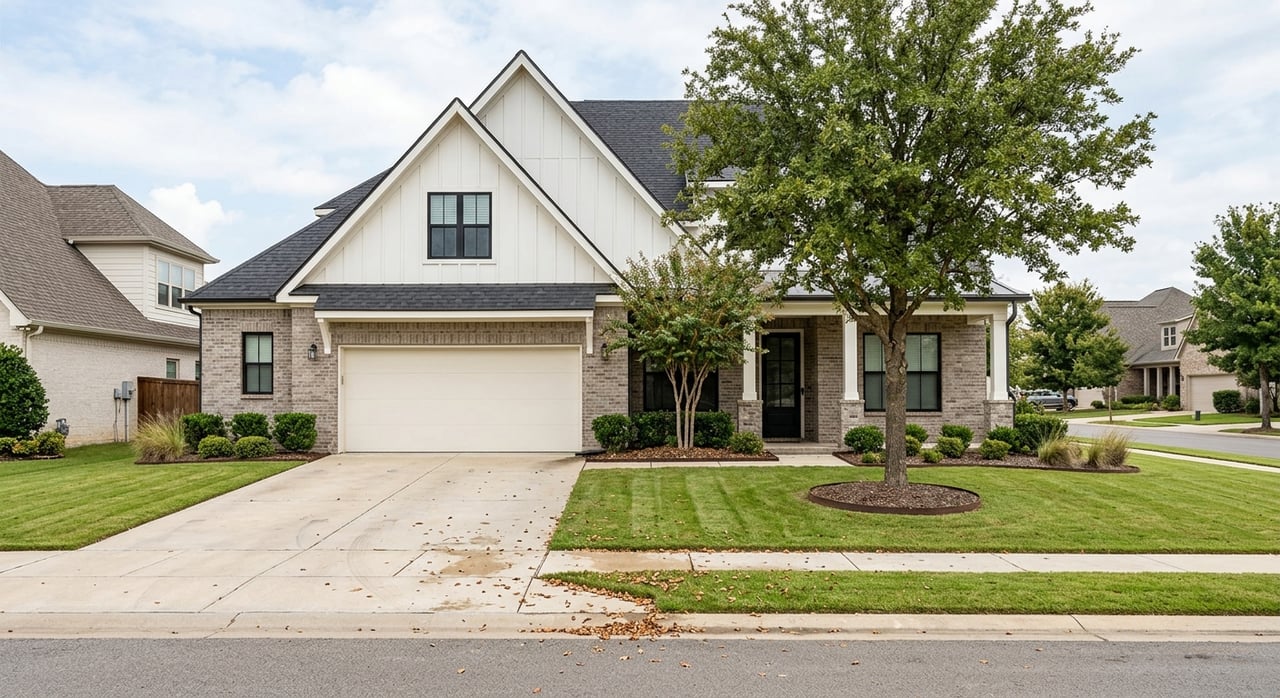
Wondering which part of Yukon will actually fit your day-to-day life? That is a smart question, because in Yukon, neighborhood choice is often less about getting into the metro and more about how you want to live once you get home. If you are comparing parks, commute routes, lot sizes, amenities, and home styles, this guide will help you sort through the options with more confidence. Let’s dive in.
Why Yukon neighborhoods feel different
Yukon is a growing Oklahoma City metro suburb with an estimated 27,615 residents in 2025. Oklahoma City is about 16 miles away, and I-40 remains the city’s main commuter spine with four major access points. For many buyers, that means most of Yukon is workable for commuting, so the bigger decision becomes how you want your neighborhood to function every day.
The housing mix also helps explain the differences. Yukon is mostly single-family detached homes, and a large share of the city’s housing stock was built in the 1970s and 1980s. That creates a clear contrast between established areas with more variation and newer subdivisions with features like sidewalks, splash pads, and more uniform floor plans.
Central Yukon for convenience
If you want to stay close to events, parks, and basic errands, central and downtown Yukon deserve a close look. Route 66 and Main Street form the area’s main east-west spine, and city events like Rock the Route take place there. This part of town tends to work well for buyers who want easy access to local activity instead of a master-planned subdivision feel.
Another big plus is the park concentration. Central Yukon is near Chisholm Trail Park, City Park, Freedom Trail Park, Kimbell Park, and Sunrise Park. Since Yukon maintains more than 218 acres across 11 parks, being near your favorite park amenities can shape everyday life more than you might expect.
Who central Yukon may suit
Central Yukon can make sense if you value practical convenience first. You may like this area if you want shorter drives to festivals, trails, splash pads, or routine stops around town. It can also appeal to buyers who prefer established streets over newer neighborhood layouts.
Surrey Hills for established recreation
Surrey Hills stands out as one of Yukon’s best-known established lifestyle areas. It is built around a golf-course setting, with Surrey Hills Golf Club dating back to 1962. Neighborhood references also point to amenities like pools, trails, playgrounds, and golf-course lots.
From a home-style perspective, Surrey Hills often offers a different feel than newer starter-style subdivisions. Recent homes in the area show flexible layouts, renovated systems, and larger household footprints. If you want an established neighborhood with built-in recreation and a more settled look, Surrey Hills is a strong comparison point.
What buyers often like about Surrey Hills
This area may appeal to you if you want:
- An established neighborhood setting
- Recreation tied into the community feel
- Homes with more varied layouts
- The possibility of larger lots or golf-course positioning
Settlers Ridge for move-up buyers
Settlers Ridge is one of Yukon’s clearest move-up neighborhood options. The HOA describes homes from 1,800 to more than 3,800 square feet, with up to five bedrooms and three-car garages. Features like steep roof lines, dormers, front porches, pocket parks, and shaded walkways give it a more polished subdivision identity.
It is also positioned well for access. Settlers Ridge highlights connections to I-40, the Kilpatrick Turnpike, and Route 66, along with quick access to major retail corridors. Recent listings ranging from roughly the mid-$200,000s into the mid-$400,000s show that the neighborhood spans a fairly broad move-up price band.
Why Settlers Ridge stands out
If you are looking for a neighborhood that feels more executive in style without leaving Yukon, this one is worth comparing. It tends to suit buyers who want a larger home, a more designed streetscape, and solid access to commuting routes and shopping corridors.
Frisco Ridge for balanced amenities
Frisco Ridge sits in a practical middle ground in both feel and price. Its amenities include a playground, basketball court, pond, soccer field, bike rack, and internal sidewalks. That amenity mix can be attractive if you want shared outdoor features without moving into one of Yukon’s highest price points.
Homes here also reflect what many buyers want in a newer subdivision. Listings often mention open living spaces, three-car garages, storm shelters, covered patios, and updated kitchens. Current examples clustering from the low $300,000s to around $390,000 make Frisco Ridge a useful option for buyers who want newer construction and neighborhood amenities in a mid-market range.
Castlewood Trails and Sycamore Gardens for newer-home living
If your top priority is newer construction with family-oriented amenities, Castlewood Trails and Sycamore Gardens are two helpful neighborhoods to compare. Both represent Yukon’s newer edges, where buyers often trade a slightly longer drive for more recent homes and planned-community features. In Yukon, that tradeoff is common and often worth weighing carefully.
Castlewood Trails centers on a playground, picnic area, creek, green space, splash pad, and access to nearby Lake Overholser. Recent homes show three- to four-bedroom plans around 1,500 to 2,200 square feet, along with landscaped yards and, in some cases, fenced backyards. It is a good example of a newer neighborhood built around practical outdoor use.
Sycamore Gardens sits near the Yukon and Oklahoma City line off Highway 4 and South Mustang Road. Amenities include two playgrounds, covered picnic areas, a basketball court, a splash pad, wide sidewalks, and cul-de-sacs. Homes commonly feature open layouts, 10-foot ceilings, granite or quartz surfaces, and energy-efficient packages, with recent pricing examples roughly from the high $200,000s to about $302,000.
One important address detail
If you are comparing school attendance zones, verify the specific address before making assumptions. Yukon Public Schools serves more than 9,100 students across 68 square miles, but border-area neighborhoods can fall outside the district. Sycamore Gardens is best viewed as a Yukon-edge option rather than a pure Yukon school-zone comparison, since it uses the Mustang district.
Valdera for larger lots
Valdera is a strong fit if you want more land and a quieter edge-of-town setting. Located northeast of Yukon proper at Morgan Road and West Britton Road, it offers homes on at least half-acre, shop-approved lots. That lot pattern makes it stand out from many newer subdivisions where homesites are more compact.
The homes also lean move-up in size and finish. Typical features include four to five bedrooms, three-car garages, fireplaces, covered patios, and wood-look tile. Current examples starting around the mid-$470,000s place Valdera in a different category than entry-level or mid-market Yukon neighborhoods.
Why buyers consider Valdera
Valdera may be right for you if your wish list includes:
- More space between homes
- A larger yard or shop-friendly lot
- Move-up finishes and floor plans
- A quieter setting with errands still within reach
According to the builder, everyday errands can be handled in Yukon or Piedmont, both about 10 minutes away. That gives you some separation without feeling disconnected from daily needs.
Woody Creek at Westbury for downsizing
Woody Creek at Westbury is one of the most distinct lifestyle options in the Yukon area because it is age-exclusive rather than family-focused. The gated community covers 38 acres and offers lots from 5,000 to 13,000 square feet, plus a clubhouse and pool. It is designed for residents age 50 and over and emphasizes a downsizing lifestyle.
With homes starting at roughly $499,000 including the lot, this is not the typical Yukon subdivision comparison. Instead, it fits buyers looking for a specific stage-of-life move, where lower-maintenance living and community amenities may matter more than maximizing yard size.
Newer neighborhoods versus established areas
Across Yukon, one of the most useful comparisons is newer amenities versus older character. Newer subdivisions often bring the features many buyers ask for today, such as open-concept living, island kitchens, granite or quartz counters, storm shelters, landscaped yards, covered patios, and two- or three-car garages. You will see that pattern in neighborhoods like Castlewood Trails, Sycamore Gardens, Frisco Ridge, Settlers Ridge, and Valdera.
Established neighborhoods often offer something different. You may find renovated interiors, larger secondary living spaces, offices, bigger lots, and less standardized home design. That does not make one choice better than the other. It simply means your best fit depends on whether you value newer finishes and shared amenities or more variety and room to spread out.
What everyday living looks like in Yukon
When you compare Yukon neighborhoods, the most helpful questions are usually very practical. How close is your commute? Which park will you really use? Do you want sidewalks and shared amenities, or a larger yard and less subdivision traffic? Those answers often shape your satisfaction more than the neighborhood name itself.
Yukon’s average commute time is 22.8 minutes, and the city’s main travel corridors include I-40, Route 66 and Main Street, Yukon Parkway, SH-4, and the west-side turnpike connections. That is why central neighborhoods feel more event- and park-oriented, while west and southwest neighborhoods often lean more toward newer homes, planned amenities, or larger-lot living.
It also helps to remember that Yukon is not one price point. The citywide median value for owner-occupied housing is $198,900, but real neighborhood examples run from the high $200,000s in some newer subdivisions to $470,000 and up in larger-lot move-up communities, and roughly $499,000 and up in Westbury. In other words, your budget can open up very different versions of Yukon living.
How to narrow your Yukon search
If you are still deciding where to focus, start with your daily priorities instead of trying to tour everything. A simple framework can help:
- Choose central Yukon if you want quick access to parks, events, and errands
- Choose Surrey Hills if you want an established setting with recreation built in
- Choose Settlers Ridge if you want a move-up subdivision feel with strong access
- Choose Frisco Ridge if you want newer amenities in a balanced middle range
- Choose Castlewood Trails or Sycamore Gardens if you want newer-home features and planned outdoor amenities
- Choose Valdera if you want more land and a quieter edge location
- Choose Woody Creek at Westbury if you want an age-exclusive downsizing option
The best neighborhood is not the one with the most buzz. It is the one that supports your routine, your budget, and the kind of home life you want to build in Yukon.
If you want help comparing Yukon neighborhoods based on your price range, commute, and must-have features, Shelby Laws can help you narrow the search and make your next move feel a lot more manageable.
FAQs
Which Yukon neighborhood is best for everyday convenience?
- Central and downtown Yukon are often the best fit if you want easier access to Main Street, city events, parks, and daily errands.
Which Yukon neighborhoods have newer amenities?
- Frisco Ridge, Castlewood Trails, Sycamore Gardens, Settlers Ridge, and Valdera all reflect Yukon’s newer subdivision style with features like sidewalks, open layouts, and community amenities.
Which Yukon neighborhood offers larger lots?
- Valdera stands out for buyers who want at least a half-acre lot and a quieter edge-of-town setting.
Which Yukon neighborhood is best for golf-course living?
- Surrey Hills is Yukon’s clearest golf-course-centered lifestyle area, with an established setting and recreation tied into the neighborhood feel.
Which Yukon neighborhoods are good to compare for move-up buyers?
- Settlers Ridge, Frisco Ridge, Surrey Hills, and Valdera are all strong options to compare if you want more space, upgraded features, or a more move-up setting.
What should buyers verify when comparing Yukon-edge neighborhoods?
- You should verify the school attendance zone by address, especially in border-area neighborhoods, because some Yukon-edge communities fall outside Yukon Public Schools.